
|
https://ift.tt/36llpxh
3DFils Introduces Line of Silver Ion Antibacterial 3D Printing Filaments https://ift.tt/3kTwIRs In collaboration with the Scientific Park of the Miguel Hernandez University (PCUMH) in Elche, Spain-based 3DFils has developed a line of antibacterial filament materials for 3D printing. Called abFil, the new line of materials will support the printing of reusable parts for applications in medical devices or equipment, and in general to enhance safety in health or risk environments. 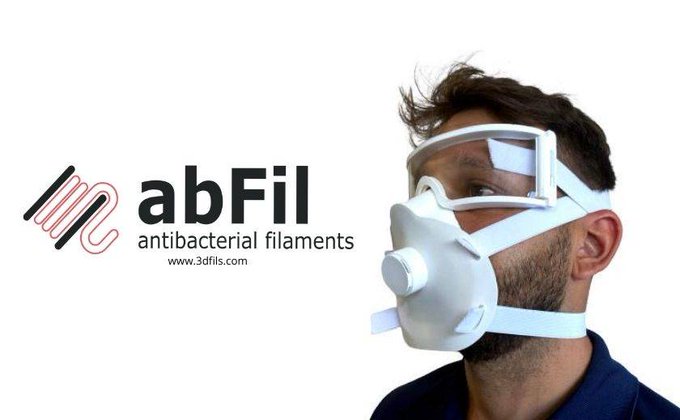
Image courtesy of 3DFils. The company added silver ions to the chemical composition of TPU or PLA-based filament, which gives the material the added ability to protect from bacteria. Silver is known for its antibacterial properties, as its ions can penetrate bacteria—such as Aspergillus niger, Campylobacter, Escherichia coli, Klebsiella pneumoniae, Legionella, Listeria monocytogenes, Staphylococcus Aureus or Salmonella enteritidis, to name a few—to distort and inhibit the bacteria’s replication process. Pablo Valero, Chief of Operations, explained their use of silver, an ‘excelled antiseptic’, saying,
The abFil filaments were tested in an independent laboratory and results showed that over 99% of bacteria were eliminated. In addition to being effective and safe for human use, using silver allows for the filament to be sterilized by a variety methods. Sterilization usually requires temperatures around 120°C for plastic objects (in the autoclaves of scientific or medical labs). Yet repeated heating can degrade the structure of the plastic material over time. With antibacterial filaments, the length of time for sterilization and the frequency of sterilization can be reduced, and the antibacterial component, copper or silver, provides an active shield that provides protection naturally. Such filament would add inherent antibacterial properties and increase the usability or reusability of medical supplies, equipment, and devices. These would be especially relevant for components with high geometric complexities, with areas typically difficult to clean or sterilize. The abFil filament is certified with ISO 22196, a standard to measure the antibacterial activity on a plastic or non-porous surface. It has already been applied in 3D printing protective glasses and masks in collaboration with organizations working with PCUMH in Elche, Spain. Using the antibacterial material, more than one hundred protective glasses were made to improve safety for food distribution volunteers. As such, 3DFils joins the network of companies collaborating with PCUMH, and local governments, such as the Generalitat Valenciana, to support innovation that will help fight against the spread of the coronavirus, locally and globally. 
Antibacterial filament used to print a mask holder Image courtesy of 3DFils Notable advances have been made recently in the antibacterial, antimicrobial space. Several filament products have been developed using a base material in combination with antibacterial or antimicrobial additives, as well as in powder or liquid materials in stereolithography, selective laser sintering, binder jetting, electron beam melting and selective laser melting, as outlined in this paper published in Nature earlier this year. Interestingly, antimicrobial/bacterial properties can be developed through different approaches, either through altering the surface roughness to develop anti-adhesive properties, or by chemical modification by adding in metals with biocidal properties, such as copper, zinc, or the more commonly used silver, or even natural plant-derived resins. Previously, Copper3D had specialized in the development of antimicrobial filament that naturally repels or prevents the development of microbes. They used a patented nano-copper additive to ensure, as per the claim on their website, that over 99.99% of fungi, viruses, bacteria and a wide range of organisms are eliminated within 24 hours. The filament is called PLACTIV, and is especially relevant for medical applications on earth, and in space. NASA has been studying Copper3D’s PLACTIVE for use in manufacturing medical equipment in space. Given that companies may use them interchangeably, it’s key to know the difference between anticmicrobial and antibacterial filaments. The former provides protection against a range of bacteria, viruses, fungi and other microbes, while the latter is specifically focused on keeping the material free from bacteria. Antimicrobial filaments are more effective and provide the most protection against microbes in general, yet the antibacterial filaments provide specific protection against contamination of surfaces by bacteria. Both these would be all the more relevant as the pandemic-impacted world becomes increasingly conscious of viruses or bacteria and preventing their spread. With the availability of material innovations such as these, it is possible to introduce these properties directly into the material and part itself. Printing via 3DPrint.com | The Voice of 3D Printing / Additive Manufacturing https://3dprint.com September 30, 2020 at 07:32AM
0 Comments
Leave a Reply. |
Categories
All
Archives
April 2023
|
 RSS Feed
