
|
https://ift.tt/2mXyOUo
Google Home Mini Golf Area https://ift.tt/2v13Sr4
We have seen Google offices with miniature golf before but here is one space at Google selling Google Home devices with mini golf. Maybe a play off the name Google Home Mini or maybe not, here is a photo and video of the mini golf area from Instagram. This post is part of our daily Search Photo of the Day column, where we find fun and interesting photos related to the search industry and share them with our readers. SEO via Search Engine Roundtable https://ift.tt/1sYxUD0 July 31, 2018 at 06:01AM
0 Comments
https://ift.tt/2M5vMsr
How to Make Dynamic Content Personalization Work for Your Company https://ift.tt/2v0sUpU Improving your company’s “customer experience,” or CX, is a critical part of keeping people happy with your brand, and we all know customer retention is a large part of business success. Often, businesses focus more on their efforts of customer acquisition than retention, and while that is not a bad thing, it is more expensive to obtain new customers than it is to keep existing ones coming back for more. Today’s consumers, particularly Millennials and Gen Z-ers, are changing their buying habits according to the experiences they have with companies. They need more attention, more personalization, and more positive moments. That is asking a lot, and many businesses just don’t know how to achieve it. Using dynamic content personalization is one of the best ways to start.
A majority of those polled for Evergage’s 2018 Trends in Personalization report indicated that their personalization programs are yielding better onsite engagement, better CX ratings, and better sales conversions. Here is a step-by-step process for marketers interested in experimenting with personalization. Start By Making Sure You Understand Your CustomersLong gone are the days where your marketing department could use a one-size-fits-all approach to target and convert customers. All customers are different, and the better you know them, the better you can serve them. By taking the time to get to know the customer and collect the necessary information you need to further personalize their experience, you are moving closer to faster conversion, which shortens your sales cycle. You can use a variety of data sources to learn more about who your customers are, from your website analytics to your customer relationship management software, to social media interactions, feedback surveys, and more. An average of 47% of people are willing to provide personal information in exchange for an improved customer experience, even amid today’s heightened awareness of privacy concerns. Getting the information isn’t the hard part; the real challenge is making sure you know what to do with it. There are many tools that help marketing teams of any size experiment with surfacing customer profile-specific content in your off-site promotions. If you are using the BigCommerce platform, for example, you might want to try their direct integration with Facebook Dynamic Ads, which allows sellers to automate the personalization of retargeted ad creative according to store browsing history.
Just make sure that you primarily think about the entire experience as a whole – and know that there will likely be multiple interactions with your brand before there is a purchase made. Your goal is to keep the entire experience pleasant, regardless of how many visits or interactions a person has with your brand. One bad interaction could disrupt the entire experience and ruin your chances at conversion.
Using your Multi-Channel Funnels and Top Conversion Paths reports in Google Analytics can go a long way towards identifying the touchpoints and specific assets that have the most to gain from personalization. Designing the experience as a whole, and then breaking it down into several smaller channel-specific experiences can help you ensure your customers get a positive experience through each stage of their journey. How is Dynamic Content Different From Web Personalization?Dynamic content is content that changes based on customer segmentation and other database-driven signals that inform rule-based triggers. You can use it in various places throughout your marketing campaigns, including email, Facebook ads, and even on-site content. Basically, it is content that changes based on some variable, such as gender, other demographic data, preferences, or purchase history. One of the easiest examples of dynamic content can be seen with services such as Netflix and Hulu. You are served with a number of recommendations for what to watch next, based on what you have previously watched. Those are dynamically served and will change based on your customer profile. Even the thumbnail images used to promote the same programs will vary, depending on who is browsing.
This is the same type of strategy that you can use with your on-site promotions, driving the right eyes to the right mid-funnel content experiences and product listings. If you are on WordPress, for example, you can use the Content Aware Sidebars plugin to establish rules that show different widgets to different audience members, based on the pages they are visiting, content categories, and even date ranges.
Before segmentation made it possible to send varied messaging to different people, results were rather spotty. Think about the implications for your email marketing efforts; if you send the same email to everyone on your list, it is really only going to resonate with a small percentage of your audience, and you will end up with hit or miss results. On-site content is the same. According to research from the Aberdeen Group, personalized marketing emails increase click-through rate by 14% and conversion rates by 10%. Personalization Is the Final StepIf everyone clicks on your dynamic promotion creative and ends up on the same generic website, that is where disappointment occurs. On-site content personalization helps you seal the deal. Web personalization changes a website’s presentation in real-time, based on the user preferences and past interactions. Hands down, the best example of this, the one that everyone cites over and over, is Amazon. Every customer has a personalized homepage based on their previous shopping experiences and browsing history. Those who visit Amazon from different countries get product information presented in their native language and currency, automatically. That is how you should aim to present your content, too. Recent data from Monetate shows that marketers engaged in personalization today are doing so across communication channels and message formats. The most popular manifestations involve ads and customer service, but over half of the ten most popular involve on-site content personalization of some kind or another.
If you are at a digital agency, unleashing the conversion boost of personalization upon your clients’ websites can be a major market differentiator. The Duda site development platform, for example, offers a rule-based personalization engine that renders different calls-to-action, widgets and other conversion-oriented design elements to different site visitors depending on their location, device, number of visits, campaign tags in URLs or time of day.
With your off-site and on-site marketing efforts working in concert, dynamic content and web personalization work together to develop those stellar customer experiences that people crave. What You Need to Get the Job DoneLet’s assume you have already done the heavy lifting of segmenting your audience, and you know who needs what kind of content to nudge them to conversion. Ultimately, you need software that facilitates that content personalization, so that no two visitors see the same content – that is, unless they by some chance, are similar enough in terms of their preferences and usage. When choosing the right platform for your business, think about how you can segment your customers, and think as far outside of the box as you can, because the more segmented, the more personalized the experience you can create. Think about how easy it is to use the platform, and whether it is possible to use third-party data in addition to the data you collect yourself. Once you have your customers properly segmented, which, of course, depends on the nature of your business and the products or services you sell, you should be able to create a personalized experience for everyone, regardless of the segment they fall into. Along with great service, personalization is a significant component of truly killer CX. SEO via SEMrush blog https://ift.tt/1K8Zzbp July 31, 2018 at 03:13AM Better Than Basics: Custom-Tailoring Your SEO Approach https://ift.tt/2OrACBE Posted by Laura.Lippay Just like people, websites come in all shapes and sizes. They’re different ages, with different backgrounds, histories, motivations, and resources at hand. So when it comes to approaching SEO for a site, one-size-fits-all best practices are typically not the most effective way to go about it (also, you’re better than that). An analogy might be if you were a fitness coach. You have three clients. One is a 105lb high school kid who wants to beef up a little. One is a 65-year-old librarian who wants better heart health. One is a heavyweight lumberjack who’s working to be the world’s top springboard chopper. Would you consider giving each of them the same diet and workout routine? Probably not. You’re probably going to:
In SEO, consider how your priorities might be different if you saw similar symptoms — let’s say problems ranking anything on the first page — for:
A new site might need more sweat equity or have previous domain spam issues, while an older site might have years of technical mess to clean up. New content may need the right promotional touch while old content might just simply be stale. The approach for enterprise is often, at its core, about getting different parts of the organization to work together on things they don’t normally do, while the approach for small biz is usually more scrappy and entrepreneurial. With the lack of trust in SEO today, people want to know if you can actually help them and how. Getting to know the client or project intimately and proposing custom solutions shows that you took the time to get to know the details and can suggest an effective way forward. And let’s not forget that your SEO game plan isn’t just important for the success of the client — it’s important for building your own successes, trust, and reputation in this niche industry. How to customize an approach for a proposalDo: Listen firstBegin by asking questions. Learn as much as you can about the situation at hand, the history, the competition, resources, budget, timeline, etc. Maybe even sleep on it and ask more questions before you provide a proposal for your approach. Consider the fitness trainer analogy again. Now that you’ve asked questions, you know that the high school kid is already at the gym on a regular basis and is overeating junk food in his attempt to beef up. The librarian has been on a low-salt paleo diet since her heart attack a few years ago, and knows she knows she needs to exercise but refuses to set foot in a gym. The lumberjack is simply a couch potato. Now that you know more, you can really tailor a proposed approach that might appeal to your potential client and allow you and the client to see how you might reach some initial successes. Do: Understand business priorities.What will fly? What won’t fly? What can we push for and what’s off the table? Even if you feel strongly about particular tactics, if you can’t shape your work within a client’s business priorities you may have no client at all. Real-world example:Site A wanted to see how well they could rank against their biggest content-heavy SERP competitors like Wikipedia but wanted to keep a sleek, content-light experience. Big-brand SEO vendors working for Site A pushed general, content-heavy SEO best practices. Because Site A wanted solutions that fit into their current workload along with a sleek, content-light experience, they pushed back. The vendors couldn’t keep the client because they weren’t willing to get into the clients workload groove and go beyond general best practices. They didn’t listen to and work within the client’s specific business objectives. Site A hired internal SEO resources and tested into an amount of content that they were comfortable with, in sync with technical optimization and promotional SEO tactics, and saw rankings slowly improve. Wikipedia and the other content-heavy sites are still sometimes outranking Site A, but Site A is now a stronger page one competitor, driving more traffic and leads, and can make the decision from here whether it’s worth it to continue to stay content-light or ramp up even more to get top 3 rankings more often. The vendors weren’t necessarily incorrect in suggesting going content-heavy for the purpose of competitive ranking, but they weren’t willing to find the middle ground to test into light content first, and they lost a big brand client. At its current state, Site A could ramp up content even more, but gobs of text doesn’t fit the sleek brand image and it’s not proven that it would be worth the engineering maintenance costs for that particular site — a very practical, “not everything in SEO is most important all the time” approach. Do: Find the momentumIt’s easiest to inject SEO where there’s already momentum into a business running full-speed ahead. Are there any opportunities to latch onto an effort that’s just getting underway? This may be more important than your typical best practice priorities. Real-world example:Brand X had 12–20 properties (websites) at any given time, but their small SEO team could only manage about 3 at a time. Therefore the SEO team had to occasionally assess which properties they would be working with. Properties were chosen based on:
#2 was important. Without it, the idea that one of the properties might have the biggest search traffic opportunity didn’t matter if they had no resources to dedicate to implement the SEO team’s recommendations. Similarly, in the first example above, the vendors weren’t able to go with the client’s workflow and lost the client. Make sure you’re able to identify which wheels are moving that you can take advantage of now, in order to get things done. There may be some tactics that will have higher impact, but if the client isn’t ready or willing to do them right now, you’re pushing a boulder uphill. Do: Understand the competitive landscapeWhat is this site up against? What is the realistic chance they can compete? Knowing what the competitive landscape looks like, how will that influence your approach? Real-world example:Site B has a section of pages competing against old, strong, well-known, content-heavy, link-rich sites. Since it’s a new site section, almost everything needs to be done for Site B — technical optimization, building content, promotion, and generating links. However, the nature of this competitive landscape shows us that being first to publish might be important here. Site B’s competitors oftentimes have content out weeks if not months before the actual content brand owner (Site B). How? By staying on top of Site B’s press releases. The competitors created landing pages immediately after Site B put out a press release, while Site B didn’t have a landing page until the product actually launched. Once this was realized, being first to publish became an important factor. And because Site B is an enterprise site, and changing that process takes time internally, other technical and content optimization for the page templates happened concurrently, so that there was at least the minimal technical optimization and content on these pages by the time the process for first-publishing was shaped. Site B is now generating product landing pages at the time of press release, with links to the landing pages in those press releases that are picked up by news outlets, giving Site B the first page and the first links, and this is generating more links than their top competitor in the first 7 days 80% of the time. Site B didn’t audit the site and suggest tactics by simply checking off a list of technical optimizations prioritized by an SEO tool or ranking factors, but instead took a more calculated approach based on what’s happening in the competitive landscape, combined with the top prioritized technical and content optimizations. Optimizing the site itself without understanding the competitive landscape in this case would be leaving the competitors, who also have optimized sites with a lot of content, a leg up because they were cited (linked to) and picked up by Google first. Do: Ask what has worked and hasn’t worked beforeAsking this question can be very informative and help to drill down on areas that might be a more effective use of time. If the site has been around for a while, and especially if they already have an SEO working with them, try to find out what they’ve already done that has worked and that hasn’t worked to give you clues on what approaches might be successful or not.. General example:Site C has hundreds, sometimes thousands of internal cross-links on their pages, very little unique text content, and doesn’t see as much movement for cross-linking projects as they do when adding unique text. Site D knows from previous testing that generating more keyword-rich content on their landing pages hasn’t been as effective as implementing better cross-linking, especially since there is very little cross-linking now. Therefore each of these sites should be prioritizing text and cross-linking tactics differently. Be sure to ask the client or potential client about previous tests or ranking successes and failures in order to learn what tactics may be more relevant for this site before you suggest and prioritize your own. Do: Make sure you have dataAsk the client what they’re using to monitor performance. If they do not have the basics, suggest setting it up or fold that into your proposal as a first step. Define what data essentials you need to analyze the site by asking the client about their goals, walking through how to measure those goals with them, and then determining the tools and analytics setup you need. Those essentials might be something like:
Don’t: Make empty promises.Put simply, please, SEOs, do not blanket promise anything. Hopeful promises leads to SEOs being called snake oil salesmen. This is a real problem for all of us, and you can help turn it around. Clients and managers will try to squeeze you until you break and give them a number or a promised rank. Don’t do it. This is like a new judoka asking the coach to promise they’ll make it to the Olympics if they sign up for the program. The level of success depends on what the judoka puts into it, what her competition looks like, what is her tenacity for courage, endurance, competition, resistance… You promise, she signs up, says “Oh, this takes work so I’m only going to come to practice on Saturdays,” and everybody loses. Goals are great. Promises are trouble. Good contracts are imperative. Here are some examples:
Don’t: Use the same proposal for every situation at hand.If your proposal is so vague that it might actually seem to apply to any site, then you really should consider taking a deeper look at each situation at hand before you propose. Would you want your doctor to prescribe the same thing for your (not yet known) pregnancy as the next person’s (not yet known) fungal blood infection, when you both just came in complaining of fatigue? Do: Cover yourself in your contractAs a side note for consultants, this is a clause I include in my contract with clients for protection against being sued if clients aren’t happy with their results. It’s especially helpful for stubborn clients who don’t want to do the work and expect you to perform magic. Feel free to use it: “Consultant makes no warranty, express, implied or statutory, with respect to the services provided hereunder, including without limitation any implied warranty of reliability, usefulness, merchantability, fitness for a particular purpose, noninfringement, or those arising from the course of performance, dealing, usage or trade. By signing this agreement, you acknowledge that Consultant neither owns nor governs the actions of any search engine or the Customer’s full implementations of recommendations provided by Consultant. You also acknowledge that due to non-responsibility over full implementations, fluctuations in the relative competitiveness of some search terms, recurring changes in search engine algorithms and other competitive factors, it is impossible to guarantee number one rankings or consistent top ten rankings, or any other specific search engines rankings, traffic or performance.” Go get 'em!The way you approach a new SEO client or project is critical to setting yourself up for success. And I believe we can all learn from each other’s experiences. Have you thought outside the SEO standards box to find success with any of your clients or projects? Please share in the comments! Sign up for The Moz Top 10, a semimonthly mailer updating you on the top ten hottest pieces of SEO news, tips, and rad links uncovered by the Moz team. Think of it as your exclusive digest of stuff you don't have time to hunt down but want to read! SEO via SEOmoz Blog https://moz.com/blog July 31, 2018 at 02:20AM
https://ift.tt/2AoxvYb
YouTube on Desktop Now Plays Vertical Videos Without Black Bars by @MattGSouthern https://ift.tt/2viMJbG YouTube has finally started playing vertical videos in their native aspect ratio on desktops, which means no black bars on the sides. This is an update that first rolled out to mobile devices last year. A post on Google’s YouTube help forums confirms that it has now been rolled out to the desktop video player.
This update applies to any video that is not recorded in widescreen format, which also includes videos in 4:3 aspect ratio (also referred to as “full screen”).
Recording in widescreen, or “horizontal mode,” is arguably the best way to capture video content — but vertical videos are still very much a part of today’s mobile-first world. When you want to capture something within a moment’s notice, grabbing your phone and recording vertically may be the fastest way to do it without missing anything. Now you can upload those vertically shot videos without any concern for a lesser viewing experience. See below for a before/after example of what vertical videos will look like following this update.
SEO via Search Engine Journal https://ift.tt/1QNKwvh July 30, 2018 at 05:47PM
https://ift.tt/2HwQOBT
Content maintenance for SEO: research, merge & redirect https://ift.tt/2NVuEYE As your site grows, you’ll have more and more posts. Some of these posts are going to be about a similar topic. Even if you’ve always categorized it well, your content might be competing with itself: you’re suffering from keyword cannibalization. At the same time, some of your articles might get out of date, and not be entirely correct anymore. To prevent all of this, you need to perform content maintenance. Learn how to write awesome and SEO friendly articles in our SEO Copywriting training »  Info
Info
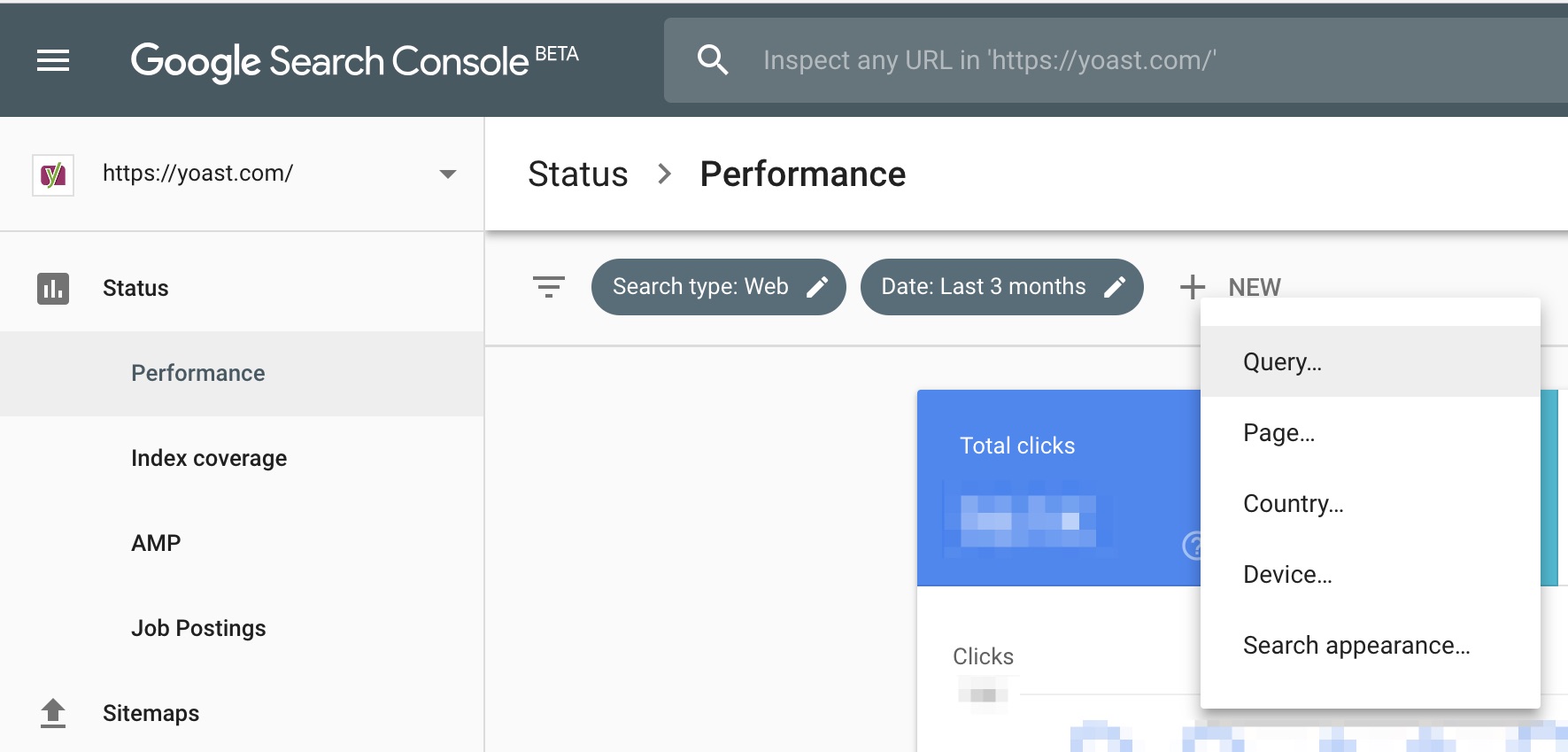
In a lot of cases, content maintenance is going to mean deleting and merging content. I’m going to run you through some of that maintenance work as we did it at Yoast, to show you how to do this. In particular, I’m going to show you my thinking around a cluster of keywords around keyword research. Step 1: Audit your contentThe first step in my process was finding all the content we had around keyword research. Now, most of that was simple: we have a keyword research tag, and most of the content was nicely tagged. This was also slightly shocking: we had quite a few posts about the topic. A I had found a total of 18 articles that were either entirely devoted to keyword research or had large sections that mentioned it. Another 20 or so mentioned it in passing and linked to some of the other articles. The reason I started auditing the content for this particular group of keywords simple: I wanted to improve our rankings around the cluster of keywords around keyword research. So I needed to analyze which of these pages were ranking, and which weren’t. This content maintenance turned out to be badly needed. Step 2: Analyze the content performanceI went into Google Search Console (the new beta) and went to the Performance section. In that section I clicked the filter bar:
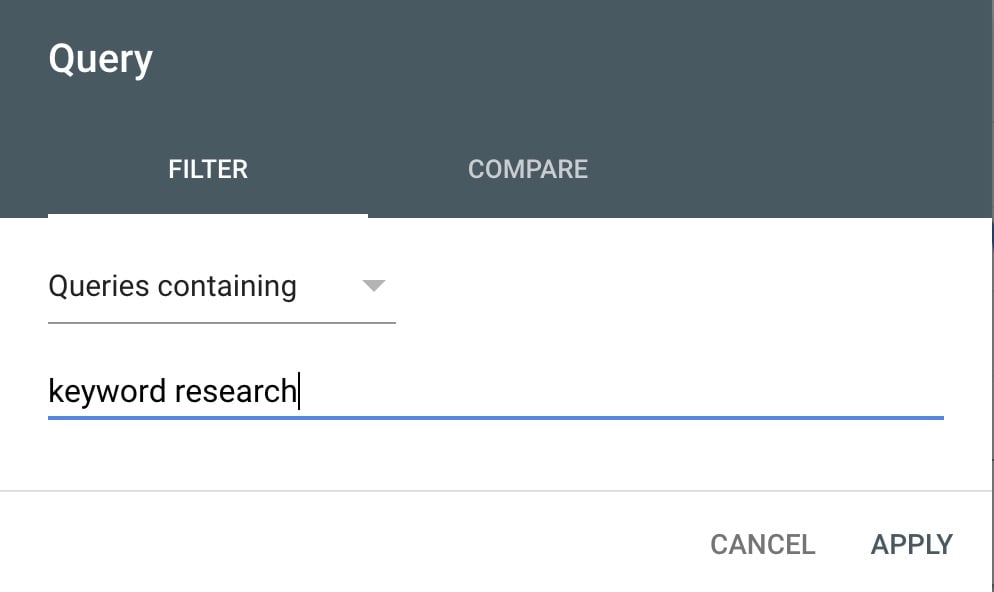
I clicked Query and then typed “keyword research” into the box like this:
This makes Google Search Console match all queries that contain the words keyword and research. This gives you two very important pieces of data:
I started by looking at the total number of clicks we had received for all those queries and then looked at the individual pages. Something was immediately clear: three pages were getting 99% of the traffic. But I knew we had 18 articles that covered this topic. Obviously, it was time to clean up. Of course, we didn’t want to throw away any posts that were getting traffic that was not included in this bucket of traffic. So I had to check each post individually. I removed the Query filter and used another option that’s in there: the Page filter. This allows you to filter by a group of URLs or a specific URL. On larger sites you might be able to filter by groups of URLs, in this case, I looked at the data for each of those posts individually. Step 3: Decision timeAs I went through each post in this content maintenance process, I decided what we were going to do: keep it, or delete it. If I decided we should delete it (which I did for the majority of the posts), I decided to which post we should redirect it. The more basic posts I decided to redirected to our SEO for Beginners post: what is keyword research?. The posts about keyword research tools were redirected to our article that helps you select (and understand the value of) a keyword research tool. Most of the other ones I decided to redirect to our ultimate guide to keyword research. For each of those posts, I evaluated whether they had sections that we needed to merge into another article. Some of those posts had paragraphs or even entire sections that could just be merged into another post. I found one post that, while it didn’t rank for keyword research, still needed to be kept: it talked about long tail keywords specifically. It had such a clear reach for those terms that deleting it would be a waste, so I decided to redirect the other articles about the topic to that specific article. Optimize your site for search & social media and keep it optimized with Yoast SEO Premium »  Info
Info
Step 4: Take actionNow it was time to take action! I had a list of action items: content to add to specific articles after which each of the articles that piece of content came from could be deleted. Using Yoast SEO Premium, it’s easy to 301 redirect a post or page when you delete it, so that process was fairly painless. With that, we’d taken care of the 18 specific articles about the topic, and retained only 4. We still had a list of ~20 articles that mentioned the topic and linked to one of the other articles. We went through all of them and made sure each linked to one or more of the 4 remaining articles in the appropriate section. Content maintenance is hard workIf you’re thinking: “that’s a lot of work”. Yes, it is. And we don’t write about just keyword research, so this is a process we have to do for quite a few terms, multiple times a year. This is a very repeatable content maintenance strategy though:
Now “all” you have to do is go through that process at least once a year for every important cluster of keywords you want your site to rank for. Read more: Keyword research: the ultimate guide » The post Content maintenance for SEO: research, merge & redirect appeared first on Yoast. SEO via Yoast • SEO for everyone https://yoast.com July 30, 2018 at 03:21PM Daily Search Forum Recap: July 30, 2018 https://ift.tt/2v38XPp Here is a recap of what happened in the search forums today, through the eyes of the Search Engine Roundtable and other search forums on the web. Search Engine Roundtable Stories:Other Great Search Forum Threads:Search Engine Land Stories:Other Great Search Stories:Analytics Industry & Business Links & Promotion Building Local & Maps Mobile & Voice SEO PPC Other Search SEO via Search Engine Roundtable https://ift.tt/1sYxUD0 July 30, 2018 at 03:00PM
https://ift.tt/2kAEqFY
SearchCap: Bing Ads rolls out new bidding strategies & more https://ift.tt/2NXBf4W  SEO via Search Engine Land: News & Info About SEO, PPC, SEM, Search Engines & Search Marketing https://ift.tt/1BDlNnc July 30, 2018 at 03:00PM
https://ift.tt/2NVzXr2
Special rates to SMX East end soon! https://ift.tt/2NSTlFd 
Google’s new Search Console. Site speed as a ranking factor. Voice search. Mobile-first index. Search advertising testing. For more than a decade, hot topics like these have attracted marketers obsessed with SEO and SEM to New York City for SMX® East. Now, it’s your turn: Join your search marketing community October 24-25 for intense training and powerful networking that will shape your career and drive your organization’s success and profitability. Become a better marketer by learning from expertsThe SMX East agenda is hand-crafted by the editorial and programming team at Search Engine Land. That means you’ll get 100 percent unbiased content assembled by some of the brightest minds in the field. During our two-day program, you’ll gain access to actionable, potentially game-changing tactics from sessions that explore the latest technologies and trends. Here are a few of the SEO sessions we’re really looking forward to…
And when it comes to SEM, these are must-attend…
Want to see all the sessions in one place? Check out the complete agenda. Lock in best rates before they’re goneSMX East prices will never be lower than they are right now. Register for an All Access Pass through August 11 and pay just $1,295. That’s $450 in savings compared to on-site rates! You’ll unlock all of the conference sessions, keynotes, clinics, networking events and amenities, including hot meals, refreshment breaks, free WiFi and more. For maximum value, upgrade to an All Access + Workshop combo pass and pay $2,095 — that’s over $750 in savings. You’ll get all of the core show benefits, plus your choice of a full-day hands-on workshop. Book your ticket now, and get ready for an unbeatable conference experience. We guarantee it. Psst… Attend SMX East with your crew to unlock special group rates and enjoy an unforgettable team-building opportunity. Opinions expressed in this article are those of the guest author and not necessarily Search Engine Land. Staff authors are listed here. About The AuthorSearch Engine Land is a daily publication and information site covering search engine industry news, plus SEO, PPC and search engine marketing tips, tactics and strategies. Special content features, site announcements, notices about our SMX events, and occasional sponsor messages are posted by Search Engine Land. SEO via Search Engine Land: News & Info About SEO, PPC, SEM, Search Engines & Search Marketing https://ift.tt/1BDlNnc July 30, 2018 at 02:58PM
https://ift.tt/2mUPImC
Yext Begins Submitting Local Business Listings to Amazon Alexa by @MattGSouthern https://ift.tt/2NYWuUb  Yext has integrated with Amazon’s digital assistant, Alexa, giving it the ability to deliver local business listings to users. Those who use Alexa for voice search will be able to receive the most current information about businesses. Alexa will now be able to surface information about business locations, contact information, hours of operation, and more. With data from Yext being submitted directly by the business itself, business owners can be sure that Alexa users are getting accurate information. According to a recent study, Alexa lags behind competitors when it comes to retrieving local information. Integration with Yext is sure to make Alexa more capable in this area. Marc Ferrentino, Chief Strategy Officer of Yext, says in the company’s official announcement:
Businesses that use Yext to manage their local listings will now find Alexa in the Yext Knowledge Network. Information will sync automatically, making the integration seamless. With this initial rollout, Amazon Alexa will use Yext-powered data to respond to queries about businesses in the US, UK, Canada Australia, Austria, Germany, India, Ireland, Japan, and New Zealand. Expansion to other countries is in the company’s future plans. Additional resources: SEO via Search Engine Journal https://ift.tt/1QNKwvh July 30, 2018 at 01:00PM
https://ift.tt/2Al6tko
Google’s ‘Speed Update’ Has Minimal Impact on Search Results by @MattGSouthern https://ift.tt/2Ao9tNf  Google’s latest mobile search algorithm update, called the “Speed Update,” has reportedly had little-to-no impact on search results. A test conducted by Link Assistant before and after the Speed Update analyzed the top 30 positions for 33,500 queries across 1 million URLs. According to Link Assistant’s findings, the speed optimization of a page has a high correlation to its position in the SERPs. However, the correlation was found to be exactly the same before and after the Speed Update. Link Assistant’s data before and after Google’s mobile search algorithm update shows that there is still no correlation between ranking position and FCP (First Contentful Paint) & DCL (DOM Content Loaded) metrics.
One thing that has changed across the board is the performance of web pages, as measured by Link Assistant’s optimization score.
While search results have not measurably changed following the Speed Update, the level of optimization of pages that continue to rank in the top 30 positions has been going up. Additional resources: SEO via Search Engine Journal https://ift.tt/1QNKwvh July 30, 2018 at 12:12PM |
Categories
All
Archives
November 2020
|



 RSS Feed
