
|
Facebook Revs Hike 33%, Daily Active Users Rise 9% https://ift.tt/2PuqLyw  Facebook reported better-than-expected third-quarter earnings per share, on Tuesday. Although quarterly revenue was up 33% to $13.7 billion, it was still short of analyst expectations. Worse, Facebook’s community activity failed to impress Wall Street. From September 2017 to September 2018, daily active users (DAUs) increased 9% to 1.49 billion. During the same period, monthly active users (MAUs) increased 10% to 2.27 billion. Cofounder-CEO Mark Zuckerberg waxed optimistic over Facebook’s future, on Tuesday. “We’re building the best services for private messaging and stories, and there are huge opportunities ahead in video and commerce as well,” he said in an earnings statement. Every month, Facebook now estimates that roughly 2.6 billion people use its flagship property, along with WhatsApp, Instagram, and Messenger, while about 2 billion visit at least one of those properties, daily. Mobile ad revenue continues to represent an ever larger share of Facebook’s total ad revenue. During the third quarter, mobile ad revenue represented approximately 92% of all ad revenue -- up from approximately 88% of total ad revenue, year-over-year. advertisement advertisement Despite Facebook’s mixed performance, some marketers say Facebook is more important than ever to their digital strategies. “The [third quarter] earnings have shown yet again that for marketers, no other platform comes close to Facebook and its family of apps, in terms of scale and audience engagement,” Yuval Ben-Itzhak, Socialbakers CEO, said on Tuesday. “With 2.27 billion monthly active users, it is still the platform where most consumer engagement with brands is happening online.” Looking ahead, some analysts see Facebook’s problems as beyond its control. “We continue to view the long-run revenue opportunities for Facebook more negatively than much of the investment community because we see limits to growth for the overall advertising industry,” Pivotal Research Group’s Brian Wieser wrote in a note to investors, on Tuesday. Mobile Marketing via MediaPost.com: mobile https://ift.tt/2oB2PsH October 30, 2018 at 06:33PM
0 Comments
Language App Babbel Launches Digital Magazine https://ift.tt/2Rq463A 
Language learning app Babbel says its recently launched magazine is the No. 1 source of leads, or prospective customers, to the Babbel program. Babbel claims to be the top-grossing language app, with over 1 million active paying subscribers. The magazine inspires readers to learn a language and sign up to pay to use the program, Babbel’s U.S. CEO Julie Hansen told Publishers Daily. Babbel magazine wants to connect with language-learners through editorial content on interesting topics, like food and culture, and practical ways to better learn a language. Recent articles include: “The Grim Reaper And Friends: How 5 Different Cultures Imagine Death” and “Bilingual Jobs: How Mental Health Interpreters Make Tough Talks Easier.” advertisement advertisement Some of the most popular articles address how to say simple phrases, such as: “Hello,” “Where is the bathroom?” and “I love you” in 10 different languages. The idea is the content will draw visitors to the site and inspire them to pay to learn a new language through the Babbel app, which costs from $6.95 to $12.95 a month. An article on a trip to Spain, for example, may link readers to Babbel lessons on Spanish phrases to use at a hotel. Or it could simply display a link for readers to try out Babbel. “We want the magazine to guide users through and to content,” Hansen said. She was previously a cofounder-COO, Business Insider and held executive roles at Condé Nast and Time Inc. Babbel publishes about 10 stories a week for the magazine. The digital magazine has a team of five writers, two video producers and a social media editor behind it. The Babbel magazine has over 1,000 articles in English. It also publishes content in seven other languages. Babbel teaches 14 languages in total: English, Spanish, German, Italian, French, Portuguese, Swedish, Turkish, Dutch, Polish, Indonesian, Norwegian, Danish and Russian. The Babbel program focuses on immersion in a new language through real-life situational dialogue, using speaking, listening reading and writing lessons. Babbel also publishes word books to help users practice on paper. The program uses “language pairs” to facilitate learning a language. If an English speaker is learning German, for example, it will use the similarities between the languages to help the user get a grasp on the language they are learning. “It is all about building on what you already know” from your native language, Hansen said. Babbel content gets syndicated on Business Insider, Mic and the Matador Network. Most of Babbel's content is aimed at an American audience, and the majority of its readership comes from the U.S. Two-thirds of the magazine’s visitors are millennials. Babbel was founded in 2007 in Germany by CEO Markus Witte. It came to the U.S. in 2015. A key goal behind the magazine is to market the brand more broadly in the U.S. Babbel plans to soon introduce crosswords (“The German word for…?”) and a podcast, Hansen said. It is available on mobile and desktop. Mobile Marketing via MediaPost.com: mobile https://ift.tt/2oB2PsH October 30, 2018 at 06:33PM Inbox Politics: Are Conservative Voices Being Driven To Email? https://ift.tt/2OYu7KK It’s one thing to pull down Gab, the site on which Robert Bowers posted anti-Semitic ravings before allegedly killing 11 Jews in a synagogue. It’s another to block legitimate conservative, or liberal, material with no ethnic slurs or hatred expressed in it. The debate is heating up as conservative voices claim they are being stymied in social media. For example, Todd Cefaratti, founder of Teaparty.net, says his firm was “one of the first organizations that felt the effects of throttling and censorship by Facebook. It went from 3 million page views per day to probably a couple of hundred thousand literally overnight.” TeaParty.net started that free fall in March 2015. Cefaratti says this was before Donald Trump was a candidate. “We monitored our traffic and on any given day, it was down to 700, (apparently per story), we literally fell off a cliff overnight. We thought we’d been hacked.” Cefaratti determined that “it was impossible that overnight, all of our followers decided they didn’t like our content.” advertisement advertisement The solution for Teaparty.net was email — email newsletters filled with curated content, with advertising supplied by Powerinbox, going to people who had opted in. Teaparty.net has since been acquired by Liftable, producer of an email newsletter called Western Journal. It appears, based on a quick reading, to be a journalistic product with a conservative skew, but serious in tone. It is also served by Powerinbox. We’ll leave our own political views out of it, but there are two questions here. First, should the social media sites be able to block political content? And who gets to decide what is acceptable? Censoring content is a First Amendment issue only if the government does it. But a First Amendment absolutist would argue that nothing should be blocked anywhere, except maybe to have an algorithm that knocks out racial epithets and profanity. Everyone deserves their forum, although you might recall A.J. Liebling’s famous comment — that freedom of the press belongs to those who own one. Here’s another truism about the First Amendment: You have the right to be wrong. When it comes to free expression, it’s not important whether you agree with the Tea Party or Bernie Sanders or not. And what does Powerinbox say? That content is being slowed down by social sites, but not necessarily in a political way. “We work with a number of GOP advertisers, and the feedback recently was that it’s not so much the content I discuss, but the number of hurdles for what they consider a political advertiser,” says salesperson Dan Lieberman. He continues that “the process to get on Facebook requires individuals to send a driver’s license, and get a piece of mail with confirmation code. A lot of people who weren’t prepared to take those steps are looking for new platforms or agencies.” So email is the medium of choice — you’re sending content to subscribers who have opted in to receive it. They’re loyalists. This is good for ESPs and outfits like Powerinbox, which will serve either liberal or conservative senders, says CEO Jeff Kupietsky. Not that email is always safe: if something is flagged as hate speech, it can find itself in the crosshairs of Spamhaus. And don’t forget that conspiracy monger Alex Jones was booted off MailChimp. Subscribers to conservative and liberal newsletters enjoy reading content that supports their views. But some people may want to escape the half-insane debate that now dominates the internet. You may find them checking their mobile devices less and only going on desktop once or twice a day. The news has been horrific. This could suppress email engagement in general, or it could be an opportunity for brands that send emails populated with familiar, reassuring tropes. On Thanksgiving, no matter who wins, they may feel nothing but relief.
Mobile Marketing via MediaPost.com: mobile https://ift.tt/2oB2PsH October 30, 2018 at 03:29PM Sam's Club Goes High Tech https://ift.tt/2zf1PAS 
Sam’s Club is looking to create the future of retail. The center of the planned innovation is a Dallas center called Sam’s Club Now, a technology lab doubling as a live, retail club store. Like Amazon Go stores, Sam’s Club Now will have its own version of self-checkout, with shoppers using the new Sam’s Club Now app, based on the Scan & Go app shoppers have been using over the last couple of years. “At its core, Sam’s Club Now will be a technology lab that doubles as a live, retail club, stated Jamie Iannone, CEO of Samsclub.com. “It’s where we will incubate, test and refine technologies to help define the future of retail.” The retailer is taking the shopping experience beyond using mobile phones for product scanning and payments. For example, machine learning technology has been incorporated into the app to automate functions, such as auto-filling of shopping lists. Voice searching has been added to wayfinding and navigation features, with a map popping up to lead members to what they’re looking for. Lowe’s has a similar capability in its app, which provides the aisle and bay of where a product is located, after the shopper types in what they’re looking for. An additional useful feature for that approach would be to use a beacon to trigger the opening of a store map upon entering the location. Sam’s Club Now, opening soon in Dallas, also plans to tap augmented reality to enable digital overlays of additional product information, such as the highlighting of product features, as detailed in a company video. The idea is to use the retail location to test new technologies, such as electronic shelf labels for instant updating of prices and using cameras to manage inventory and optimize store layout. Retail innovations such as Sam’s Club Now and Amazon Go will allow consumers to experience the future of shopping. Once fine-tuned, those consumer shopping experiences will be expected from the retail industry everywhere. The future of shopping is not about the store. It’s about the consumer shopping experience. Mobile Marketing via MediaPost.com: mobile https://ift.tt/2oB2PsH October 30, 2018 at 01:01PM Personalize -- But With Purpose https://ift.tt/2Py6EPY I recently drove by a billboard addressed to a “Guy-Stuck-n-Traffic,” which stayed with me for all the wrong reasons. The message aimed to build a deeper connection with passersby, but it missed its mark — I wasn’t stuck in traffic at all. As I zoomed by, it occurred to me that, though the pressure to personalize marketing is increasing across all channels, marketers are missing a roadmap for success. For a long time, personalization was the domain of digital while TV, radio and outdoor ads continued to speak to broader audiences. But today’s constantly connected audiences and the increase in clutter have made it really difficult to capture consumer attention. As mass marketing messages fail to make an impact, it’s no surprise that traditional marketers are enticed by personalization. It’s a promising path — but that doesn’t mean it’s easy to get right. Personalization is more than a box to check; it serves to make a campaign more relevant to its audience. When marketing to a broad audience, though, personalization requires a “blunt” approach: you need to find a way to increase relevance without alienating valuable segments of your audience. advertisement advertisement Consider the “Guy-Stuck-n-Traffic” billboard. The message could have invoked other details that are not only specific, like traffic conditions and gender, but also reliable. Are drivers on a curvy street? Is there a majestic mountain vista? Is the neighborhood known for its restaurants? Even simply acknowledging that the audience is in a vehicle would have resulted in a more personal and inclusive experience. Another blunt personalization tactic is to give choice. Snickers’ mood packaging asks consumers to choose a wrapper that reflects any number of mindsets — they can be “snippy,” “feisty,” “spacey” and so on. It’s a win-win: the brand connects on an emotional level without alienating potential snackers. Along the same lines, Coca-Cola’s Freestyle machines let you choose if you want your beverage vanilla, fruity, caffeinated, diet and so on. By giving consumers agency, these brands get the benefits of personalization without risk of losing relevance. Blunt personalization offers brands a way to build deeper connections in static environments, but it’s also clear that dynamic, data-driven targeting isn’t just for digital anymore. You’ve likely read about Google’s outdoor ads and smart billboards that can target gender or car model. Similarly, as digital and mobile encroach further on TV ad spend, there will be a greater demand for personalized TV spots. Traditional tech is catching up to digital and blurring the lines between the two along the way. You can see personalization in product development, too. An AI-powered T-shirt business, for example, sold millions by targeting micro-audiences like “mothers who listen to Iron Maiden born in August,” while a Harvard professor built a system that uses deep learning to invent new drug compounds. Nestle recently launched a nutrition program that builds custom programs based on "artificial intelligence, DNA testing and the modern obsession with Instagramming food,” according to a report in Bloomberg. The ante for precision has been upped everywhere. One of the underrated benefits of personalization is the ability to reach consumers based not just on who they are, but how attentive they are when you engage them. In analyzing more than 20 different campaigns where the primary KPI was store visits, we found that ads optimized based on attention had a 14% higher visit-conversion rate. It’s more subtle than, say, gender-specific copy, but this kind of personalization helps brands adapt to the nuances of mobile behavior. It will never be easy to cut through the noise of 10,000 brand messages a day, but marketers who embrace personalization are more likely to capture positive consumer attention. The key is to aim for relevance, while also understanding where your best opportunities lie on the spectrum of personalization. If you do it right, you’ll spark a valuable connection with your audience: one that results in opportunity instead of an article about how to avoid misfires. Mobile Marketing via MediaPost.com: mobile https://ift.tt/2oB2PsH October 30, 2018 at 01:01PM MediaMath Launches Blockchain-Backed Guaranteed Viewable Market https://ift.tt/2StfCfU The demand-side programmatic marketing tech enology firm MediaMath is launching what it says is a 100% viewable, 100% fraud-free Guaranteed Viewable Market. It offers inventory work across mobile, desktop and digital out-of-home (DOOH). The platform, which was released in beta on Tuesday, will incorporate blockchain technology and impression-level verification powered by the company’s enterprise identity solution. MediaMath says the marketplace will only surface inventory with “the highest probability of viewability, based on numerous factors, including placement characteristics and publisher contextualization — before it is bought at auction.” Post-impression, the company works with Moat to measure viewability and DoubleVerify to check for fraud. The Guaranteed Viewable Market is being launched in partnership with Underscore CLT, which is providing the blockchain technology powering the marketplace. MathCapital, MediaMath’s venture capital arm, funded the company. MediaMath says the new market is part of a larger product road map “to create the next-generation supply chain” of advertising. It works with the company’s existing cross-device identity stack and its artificial intelligence solutions to allow for a more seamless transition for marketers.
advertisement advertisement Mobile Marketing via MediaPost.com: mobile https://ift.tt/2oB2PsH October 30, 2018 at 10:56AM Study: Mobile Video Ads With Interactive Call-To-Action Deliver Better Results https://ift.tt/2QdDjak Not all mobile video ads are created equal. Mobile video ads that are interactive and “shoppable” are more effective at capturing user attention and generating brand lift, according to a new study from Interactive Advertising Bureau and its Digital Video Center for Excellence. The IAB study, “The Interactive Ad Effect: CTAs in Mobile Video Shoppable Ads,” looked at three different calls-to-action (CTAs) across four different verticals. It showed all CTAs are successful in increasing consumer attention and can lay “the groundwork for a direct relationship between the consumer and the advertiser.” Further, one specific CTA, asking consumers if they want to “learn more,” yielded even higher engagement and brand recall. Consumers in the study also liked the convenience of being able to buy a product directly from an ad. “These findings indicate that customers note the ability to shop or learn more right from the onset. The great promise for shoppable ads is not only the immediate ability to capture sales, but also in smart retargeting,” said Sue Hogan, senior vice president, research and measurement. IAB. advertisement advertisement “Retargeted ads would provide greater potential for brands to both convert to sales as well as to build direct relationships with consumers,” she added. The IAB released the findings at its Direct Brand Summit, which kicked off Tuesday in New York. The full report is here. Mobile Marketing via MediaPost.com: mobile https://ift.tt/2oB2PsH October 30, 2018 at 10:28AM Walmart Has Some Ideas On How To Cut Checkout Lines https://ift.tt/2Jpc7CX If time is money, the long lines retail consumers face during holiday season are like getting socked with annoying taxes, surcharges and fees on top of an already pricey cable bill. Walmart yesterday disclosed a few ways it intends to speed things along. “The retail giant announced Tuesday a host of improvements intended to streamline how its customers shop over the busy holidays, including Check Out With Me, a service that will place Walmart workers with handheld scanners in the busiest areas of its stores, such as the garden center and electronics, so customers can grab a big item and pay for it right there, skipping the regular checkout lines,” Mike Murphy reports for MarketWatch. “The world's largest retailer first tested the service in its Lawn & Garden Centers in more than 350 stores this past fall, which fared well, according to Steve Bratspies, the company's chief merchandising officer in the U.S.,” the AP’s Anne D’Innocenzio reports for ABCNews. “The Bentonville, Arkansas retailer will also have digital store maps on the Walmart app to help customers find items more quickly,” she adds. advertisement advertisement Walmart also took the wraps off a plan to test going cashier-less at its new, smaller Sam’s Club Now store that will be opening soon in the Dallas area. “Instead of cashiers, the store is staffed with ‘member hosts,’ who will act more like concierges, the company says. And instead of scanning items at a point-of-sale cashier stand, customers will use a specialized Sam’s Club Now mobile app,” reports Sarah Perez for TechCrunch. “The app leverages Sam’s Club existing ‘Scan & Go’ technology, which is used today across its retail locations to help speed up checkout. With the current Scan & Go mobile app, shoppers can opt to scan items as they place them in their cart, then pay right on their phone. At Sam’s Club Now, however, the use of mobile scan-and-pay is required, not optional,” Perez continues. As for the member hosts, “we’ll empower them with new technology that will allow them to serve members better and faster. We’ve known for a long time our associates make the difference, and that won’t change just because shopping preferences evolve,” Jamie Iannone, the CEO of SamsClub.com, writes in a blog post. “And shopping preferences are evolving. Since launching our Scan & Go app two years ago, we’ve seen its popularity continue to increase. More than 90% of members who try Scan & Go use it again on their next trip, and regular use is up 40% this year,” he continues. Walmart is also improving its online commerce capabilities in order to better compete with Amazon and other digital rivals (whoever they might think they are). “Walmart has made a slew of investments to beef up its website this year, including adding new brands like those sold by Lord & Taylor and Moosejaw. The company said this holiday season it will have its ‘broadest assortment ever’ of merchandise for sale both in stores and online. Without Toys R Us on the scene, it’s planning to have 30% more toys for sale in stores, and 40% more toys available on walmart.com," writes CNBC’s Lauren Thomas. “Still, Cowen & Co. analyst Oliver Chen said Walmart’s assortment continues to lag that of Amazon, according to a research note Sunday. Cowen found Walmart carries a little more than half of the top 1 million best-selling items on Amazon. Chen said Walmart is ‘missing many important brands and breadth and depth’ in certain categories,” Thomas adds. The Cowen report was based on based on a meeting with Jet.com founder Marc Lore, who became Walmart’s e-commerce president and CEO when the site was sold to the retailer two years ago. “The report said that while the company ‘has acquired a handful of successful digitally native retailers,’ it’s Lore's view that Walmart ‘will need to acquire at least 40-50 brands that resonate with millennials to help lift the margins in the long-tail,’” Áine Cain reports for Business Insider, which has published Cowen’s full research note here. “Lore’s comments to Cowen mirror his statements at an October 16 meeting with investors. At the meeting, Lore said that in the future, major retailers will largely sell similar products, so differentiation will be the key to success,” Cain continues. “How do you actually create a reason for customers to shop on your website versus your competition?” Lore said at the meeting with investors, Cain reports. “And I think this is one way. This is one big way, having proprietary content. It’s not going to be just four brands aren't going to do it, but imagine 40. So the idea is over a long period of time to continue to incubate and buy and build. So we have a portfolio of brands and unique content.” Along these lines, see Sarah Mahoney’s story in Marketing Daily this morning about Blue Apron’s plan to sell four varieties of meal kits to New Yorkers through the Jet.com website that will be delivered through Jet’s City Grocery program. Getting back to time is money, think of all that time you won't spend on line at the local ShopRite. Mobile Marketing via MediaPost.com: mobile https://ift.tt/2oB2PsH October 30, 2018 at 07:28AM
https://ift.tt/2pkLRAs
PSFK Tracker Proves DTC Takes Spotlight Across Industry Verticals https://ift.tt/2zc2AKY In our latest results from our Retail Innovation Tracker, PSFK researchers found that that direct-to consumer brands have outpaced a majority of the market, and solidified their spots as industry leaders at the top of our survey that ranks experts’ perceptions of 150+ well-known consumer-facing brands. Meanwhile, the study, conducted in September, shows companies at the bottom of the list seem to be at high risk of being displaced, or even replaced, in their sectors. The above chart shows the highest ranked companies on our Retail Innovation Tracker, ranging from Tesla (92) to online grocery brand Brandless (70), and all of which have DTC-related strategies. Out of the mix, 60% of the companies (Tesla, IKEA, Airbnb, Warby Parker, Casper and Brandless) are definitively DTC brands, while 20% of the companies (Amazon and Alibaba) are e-commerce brands, and the remaining 20% (Nike and Apple) are legacy brands that have implemented elements of DTC strategies. As a result, it’s evident that DTC upstart brands are rapidly gaining market share, as well as having a major influence on traditional retailers’ strategies. PSFK’s latest report, Future of Retail 2019: A DTC Playbook For Owning The Retail Life Cycle, unpacks the DTC opportunity by examining key trends and presents strategies that all brands and retailers can implement in order to own the entire retail life cycle. When analyzing these industries from a larger scope, we can clearly see some major movements—or rather, pure disruption—taking place in each industry and across the board. On average, respondents perceived the following industries to be most innovative: Now in our sixth iteration of the retail innovation tracker survey, we are clearly seeing how different verticals stratify on our chart. For September, here’s a topline analysis for key sectors in order of their overall innovative rank: eCommerce Since then, we’ve seen Amazon’s latest move: opening its New York Store, called ‘Amazon 4-Star,’ which uses online consumer data to curate wares in the brick-and-mortar store. The store will feature items that are trending online, top additions from customers’ wish lists, as well as popular items and products that are specific to a New York market. By using local customers’ data to rotate merchandise selection, companies are able to give customers the same sense of authenticity, intimacy and community appeal that local markets offer, while still functioning as large organizations. In this way, brands have a better opportunity to offer customers elevated experiences that not only saves them time, but also gives them a feeling of underlying connection to other customers. In order for Alibaba to compete with the likes of Amazon, it will need to continue to expand its footprint not only in other markets, such as digital health services, but also into physical spaces that use data from its online presence to accommodate customers in a forward-thinking approach to service. Sports/Fitness- Lifestyle PSFK’s Future of Retail 2019 spotlights Nike’s latest innovations, especially the brand’s DTC strategy, which uses data to not only inform store design, but also incorporate localized services and select product stock in its L.A. store called Nike by Melrose, which curates the merchandise using data based on locals’ tastes and shopping behaviors. The spotlight also showcases Nike’s effort to bring its customer experience to life through its mobile app, which offers customers everything from lifestyle inspiration, community and expert assistance to exclusive access to products and events. However, what sets Nike’s app apart from its competitors is that the mobile experience extends to the retail locations, creating a shopping ecosystem that empowers shoppers to take control, with minimal, yet more efficient, assistance from store associates. Shoppers can pre-plan visits through the mobile app, making an appointment for an expert consultation with a store associate or reserving products for in-store try on, enabling them to have more seamless, informed and personalized shopping experiences. In many ways, Adidas is behind Nike when it comes to offering a personalized shopping experience and service-oriented ecosystem via the brick-and mortar experience. However, in terms of digital competition, Adidas is making moves to compete with Nike. In July, Adidas announced that it will integrate its two apps into one optimized user experience, which will make the shopping experience even more convenient.  Grocery Earlier this year, Amazon invested in the June oven, an AI-enabled, multifunctional appliance designed to streamline cooking. Now the e-tailer is connecting the oven to Whole Foods, another one of its investments, to enable specific cooking instructions for the grocer’s branded items. Meanwhile, Trader Joe’s, owned by parent company Aldi, is taking an authentic approach towards connecting with customers, by using transparent storytelling to share its brand narrative. Through its podcast, called Inside Trader Joe’s, the grocery retailer brings customers behind the scenes to learn how the company operates. The five-part series involves employees from store crew members to the President and COO of the company, and provides information on products, contests and future plans. Both Amazon/Whole Foods and Trader Joe’s recent innovations signify efforts to make CPG products more engaging and appealing for consumers to cook, as a way to overcome shifts in consumer buying behaviors. However, they will need to do a bit more than just engagement around packaging, in order to compete with consumer-centric on-demand meal companies and DTC food brands like Brandless (70) that are rapidly gaining market share. Next month, PSFK will take a deep dive into these strategies in our Last-Mile Delivery Debrief. Department Store & Big Box Retailers – 42 While we took a look at how IKEA has been moving ahead on all fronts in the August post, some of its latest innovations include the opening of its IKEA Planning Studio in central London, which is a smaller-format store dedicated to kitchen and bath, where shoppers can book an appointment to receive one-on-one consultation sessions from experts in order to help them with their home renovation projects. This move to power one-to-one relationships and offer expertise at every stage reflects part IKEA’s DTC-driven strategy to take the brand from a low-cost furniture store warehouse to an expert lifestyle curation and home design brand. Additionally, IKEA announced how it plans to expand into more global markets by taking a localized approach to what products it sells and how it markets them based on the unique cultural differences of its consumers. Yet again, we see this theme of a “local marketplace” feel, and the value that retailers see behind giving customers a intimately curated, genuine experience. Meanwhile, Nordstrom (55) and Target (55) tied for the second highest ranking, scoring 27 points behind IKEA. Both Nordstrom and Target have implemented technologies across every touchpoint, which we’ve outlined in a competitive snapshot report that compares innovations across Nordstrom, Target, Walmart, Macy’s, and Kohls’ customer experiences. Outdoor Apparel Retailers – 40 Earlier this year, PSFK’s Customer Experience Playbook highlighted a strategy called Network Impact, which revolves around how brands are syncing audiences to real-life opportunities that encourage them to take direct action by volunteering for or contributing to a global initiative while bringing people together around the pillars of brand values and creating a community of changemakers. A prime example of this is Patagonia’s Action Works digital platform, connects people and environmental non-profits, helping them get involved through events, petitions and volunteering in their community. Additionally, its Worn Wear program increases the longevity and sustainability of the brand’s clothing by offering repairs in select stores and incentivizes donation of old products by offering discounts for future purchases. By enabling people to act on their broader missions, Patagonia has established itself as direct influencers of positive impact on a global level. Meanwhile, in terms of its operations, Patagonia was also ahead of the curve, when it partnered with cloud-based platform 7thonline to optimize wholesale inventory based on customer demand in 2016. The platform monitors customer purchases, including product, location, in-store and online, to understand demand from an attribute level and predicts preferred styles, colors and sizes. With this data, Patagonia is able to understand inventory productivity, assess inventory position and reduce inventory aging. PSFK’s Future of Retail 2019 report highlights this strategy, called Responsive Operations, which discusses how brands can use data to quickly adapt or even anticipate shifts in consumer demands to be first to market with new products and/or better serve the needs of customers. REI embodies these same principles of authenticity. In fact, this month PSFK sat down with REI’s Chief Customer Officer, Ben Steele, to understand how REI helps its members live life fully by embracing the outdoors and opting out of the consumer frenzy exemplified by Black Friday. Fast/Casual Dining Restaurant – 28 So what is Starbucks doing that is setting the brand so far ahead in the industry? Simply put, it is successfully leveraging technology to enhance the customer experience across all touchpoints, while optimizing its store locations as spaces for community-building (and of course, brand-building as well). The below list offers a brief snapshot of some of Starbucks’ latest innovations and activations:
 Quick Serve Restaurants – 28 Given the fact that quick service restaurants are fast-paced with minimal table service by design, McDonald’s goal to have cashier-less kiosk checkouts at all U.S. locations by 2020 is a good indication that it is on a track in terms of innovating its customer experience to meet today’s consumers’ expectations of convenience, control and immediacy. Beyond that, the chain’s Shanghai customers can use the WeChat messaging app to order food and coffee for delivery, which is one of the transformative steps for transactions and payments that occurring in the Quick Serve Restaurants industry. Another company innovating the point of purchase is Domino’s, which experimented with letting customers order from its nearby restaurants by creating clickable augmented pizza boxes on Snapchat. For the post-purchase experience, the chain announced in 2017 it could be employing robots to deliver pizza, along with its introduction of its IFTTT integration that aimed to make deliveries easier for customers. Additionally, more recently, Domino’s started its “Paving for Pizza” campaign, which seeks to fix potholes in all 50 states to ensure safe transport for pizza. As a whole, Domino’s Pizza’s efforts to enhance the customer experience through payment and delivery satisfaction, as well as elevate the brand experience by creating local impact, indicate that there is significant opportunity for the direct-to-consumer pizza brand to gain a long-term advantage through innovation.  Convenience Retailers – 25  Gas/Petrol With a large amount of competition in the market, companies like Speedway and BP can transition themselves into convenience stores and electric car charging stations. In order to prepare, Gas/Petrol Stations Retailers can build brand and customer experience through loyalty programs and in-car or remote ordering options to increase convenience and efficiency for customers. Each month, PSFK surveys progressive consumers about their impressions of retailers and DTC brands. The results are published in a Retail Innovation Tracker which can be found here. Mobile Marketing via PSFK http://www.psfk.com/ October 30, 2018 at 06:53AM
https://www.toprankblog.com/wp-content/uploads/dumb-marketing-jokes.png
20 More Dumb Jokes for Smart Marketers https://ift.tt/2Of2oju
 A great pun is like a great digital marketing campaign: If you do it right, it will stick with people until they’re compelled to share it — even the simplest ones require a level of sophistication to make and to appreciate. Every marketer I know is incredibly smart — whether it’s my team at TopRank Marketing, the influencers and thought leaders we work with, or the folks I’ve met at marketing conventions. Marketers are sharp, detail-oriented, intellectually rigorous, and susceptible to flattery. So, if you’re a smart digital or content marketer, take a break from your challenging, rewarding work and enjoy these jokes. And remember: If your colleagues don’t laugh, they’re just not as sophisticated as you. A great pun is like a great digital marketing campaign: If you do it right, it will stick with people until they’re compelled to share it — even the simplest ones require a level of sophistication to make and to appreciate. Every marketer I know is incredibly smart — whether it’s my team at TopRank Marketing, the influencers and thought leaders we work with, or the folks I’ve met at marketing conventions. Marketers are sharp, detail-oriented, intellectually rigorous, and susceptible to flattery. So, if you’re a smart digital or content marketer, take a break from your challenging, rewarding work and enjoy these jokes. And remember: If your colleagues don’t laugh, they’re just not as sophisticated as you.
20 Dumb Jokes for Smart Marketers1. Q: Why did Dracula add the Creature from the Black Lagoon to his marketing team? A: A-COUNT based marketing…at scale! 2. I made a joke about organic reach on Facebook… nobody got it. 3. My marketer friend quit and started a bakery. I tried to walk in the door and this big swatch of fabric popped up and blocked my way! I backed up; it disappeared. I walked forward, big cloth thing in the way again! “Hey,” I shouted at my friend, “I can’t get in!” “Oh, sorry,” she says, “You have to click on the banner to accept cookies.” 4. I hired an earthworm, a centipede and a millipede to do my email marketing. They’re really good at segmentation. 5. I’ve been retweeted a couple times by Altimeter Group — but I take little Solis in that fact. 6. I’m doing content marketing for a cheese company. We’re creating blog posts and a few grated assets.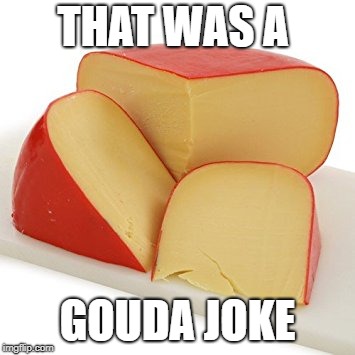 7. I like to run all my AB tests in reverse after the first round. I call it AB/BA testing. It’s great, but only works if your target audience are dancing queens, young and sweet, only 17. 8. I have this marketer friend who still believes in last-touch attribution. He just opened a brick-and-mortar store. He says his highest-performing sales rep is the counter in front of the cash register. 9. Knock, knock! Who’s there? Documented content marketing strategy! Documented content marketing strategy who? I’m not surprised you didn’t recognize me… Joe Pulizzi was right. 10. I nicknamed my cat “The Vast Majority of Social Media,” because he doesn’t like me, follow me, or share anything. 11. And I nicknamed my dog “Number of Twitter Followers,” because he doesn’t pay the bills but he makes me feel important. 7. I like to run all my AB tests in reverse after the first round. I call it AB/BA testing. It’s great, but only works if your target audience are dancing queens, young and sweet, only 17. 8. I have this marketer friend who still believes in last-touch attribution. He just opened a brick-and-mortar store. He says his highest-performing sales rep is the counter in front of the cash register. 9. Knock, knock! Who’s there? Documented content marketing strategy! Documented content marketing strategy who? I’m not surprised you didn’t recognize me… Joe Pulizzi was right. 10. I nicknamed my cat “The Vast Majority of Social Media,” because he doesn’t like me, follow me, or share anything. 11. And I nicknamed my dog “Number of Twitter Followers,” because he doesn’t pay the bills but he makes me feel important.  12. How many CRO experts does it take to change a light bulb? 100 the first time, 98 the second time, 93 the third time, 104 the fourth time, 25 the fifth time…. 13. I handed Scott Brinker my iPhone and he scratched it! Then he picked up my tablet and scratched it, too! He even put a dent in my Google Home! I said, “Scott, what are you doing?” He said, “What I do best: mar tech!” 14. Knock, knock! Who’s there? Brand standards! Brand standards who? Sorry, knock-knock jokes don’t fit our mission and purpose statement. Could you tell this as a light bulb joke instead? 15. I’ve lined up Scooby-Doo, Rin Tin Tin, and Lassie for my latest eBook. I call it influencer barketing. We don’t have signed contracts, but we shook on it. 16. Have you heard about the tech startup trying to disrupt honey marketing? They go on and on about the “authenticity” of their bees and their “next-generation bleeding-edge hive.” If you ask me, it’s all buzzwords. 17. I’m trying to get in shape, so every time I schedule a post on social media, I do ten push-ups. I’m already getting Buffer. 18. So a social media marketer lost his job and went to work on a farm. He worked hard, but had one weird quirk: every morning, he would do a belly flop into the hog trough! After a few days, the farmer had enough. “You city folks sure are strange,” the farmer said. “Why are you always floppin’ headfirst into the pig slop?” “Sorry, force of habit,” the social media marketer replied. “I’m trying to make an impression in your feed.” 19. Jokes about amplification are only funny if everyone gets them. 20. Hey, pirate marketer, do you have trouble proving that your campaigns generate revenue? “Arr! Oh, aye.” 12. How many CRO experts does it take to change a light bulb? 100 the first time, 98 the second time, 93 the third time, 104 the fourth time, 25 the fifth time…. 13. I handed Scott Brinker my iPhone and he scratched it! Then he picked up my tablet and scratched it, too! He even put a dent in my Google Home! I said, “Scott, what are you doing?” He said, “What I do best: mar tech!” 14. Knock, knock! Who’s there? Brand standards! Brand standards who? Sorry, knock-knock jokes don’t fit our mission and purpose statement. Could you tell this as a light bulb joke instead? 15. I’ve lined up Scooby-Doo, Rin Tin Tin, and Lassie for my latest eBook. I call it influencer barketing. We don’t have signed contracts, but we shook on it. 16. Have you heard about the tech startup trying to disrupt honey marketing? They go on and on about the “authenticity” of their bees and their “next-generation bleeding-edge hive.” If you ask me, it’s all buzzwords. 17. I’m trying to get in shape, so every time I schedule a post on social media, I do ten push-ups. I’m already getting Buffer. 18. So a social media marketer lost his job and went to work on a farm. He worked hard, but had one weird quirk: every morning, he would do a belly flop into the hog trough! After a few days, the farmer had enough. “You city folks sure are strange,” the farmer said. “Why are you always floppin’ headfirst into the pig slop?” “Sorry, force of habit,” the social media marketer replied. “I’m trying to make an impression in your feed.” 19. Jokes about amplification are only funny if everyone gets them. 20. Hey, pirate marketer, do you have trouble proving that your campaigns generate revenue? “Arr! Oh, aye.” 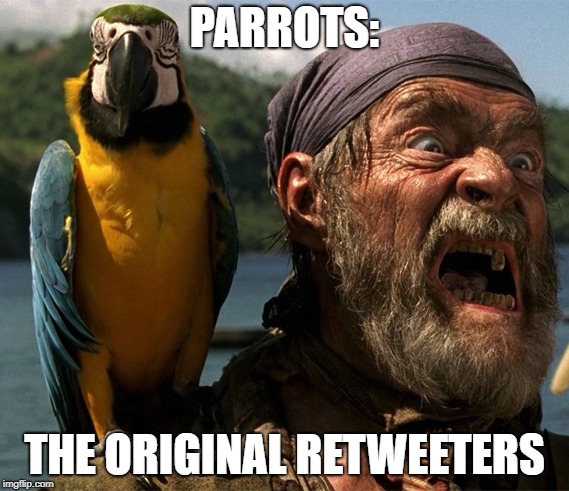
Great Marketing Is No JokeI said up top that great puns and great marketing campaigns have a lot in common. Here’s one important difference: A joke is a single discrete unit, meant to score a laugh and then vanish so the next joke can hit. Marketing campaigns work best when they’re an always-on, sustained effort that builds a relationship. So, you should use creativity, humor and even wordplay in your marketing. But don’t just toss out individual jokes and expect them to do the heavy lifting. For example, I wrote ten puns just last week for a client, hoping at least one of them would go viral. Unfortunately… No pun in ten did. Ready for more laughs? Fear not. We got 'em.The post 20 More Dumb Jokes for Smart Marketers appeared first on Online Marketing Blog - TopRank®. Mobile Marketing via Hubspot https://ift.tt/2wiHYzh October 30, 2018 at 05:39AM |
CategoriesArchives
April 2023
|
 RSS Feed
